Independent editorial analysis. Hotel inventory, restaurant operation, amenities, prices and cancellation terms must be verified for the exact property and dates before booking.
Premier Inn owner Whitbread reported better-than-expected first-half adjusted profit and maintained its outlook while continuing a five-year transformation. The corporate changes matter to travellers only where they affect a real property, restaurant, booking term or route—and none should be mistaken for a blanket price or availability promise.
Published 13 October 2026 from Whitbread’s official FY27 interim-results materials and independent Reuters reporting. This article analyses disclosed company strategy; it does not provide investment advice or guarantee a hotel, restaurant, room rate or opening date.
What Whitbread reported on 13 October
Whitbread’s investor site identifies 13 October 2026 as the date of its FY27 interim results and provides the company’s report, press release, presentation and supporting materials. Reuters reports that the Premier Inn owner produced first-half adjusted pre-tax profit above market expectations and kept its full-year outlook. The same report says recent accommodation sales increased in both the United Kingdom and Germany in the five weeks to 1 October. Those are company-level trading signals, not a live room-availability feed and not a forecast for the price of an individual stay.
The useful travel question is therefore narrower than the financial headline. A stronger trading period can influence how the group allocates capital, renovates hotels, opens sites and changes adjacent food operations, but it does not tell a customer whether a family room is free next Friday. Corporate performance should be used to understand the direction of the network. Booking decisions still require property-level evidence: the official hotel page, a dated booking result, the room’s occupancy conditions, the full payable price and any service notices.
The five-year plan is moving Whitbread toward a hotel-focused business
Reuters describes a five-year turnaround centred on a more focused hotel model. It includes the closure of 197 remaining branded restaurants, the proposed sale of freehold property and potential job reductions. Whitbread’s own investor materials are the primary place to follow that plan and any later revisions. The strategy is significant because Premier Inn has historically shared many sites with restaurant brands, so a change in the food estate can alter the practical experience around a hotel even when the bedrooms continue operating.
A restaurant closure beside a hotel does not automatically mean the hotel is closing, and a property transaction does not automatically mean guests will notice an immediate change. Some freeholds may be sold and leased back; some restaurant space may be converted or redeveloped; and timing can vary by site. Travellers should not infer a specific outcome from the group headline. The responsible check is the exact hotel’s facilities page and booking flow, followed by direct confirmation if a meal plan, accessible route or adjoining venue is essential.
Why better trading does not predict your room price
Reuters reports that UK accommodation sales rose 4.5% and German sales rose 31.2% in the five weeks to 1 October. Sales growth can reflect several combinations of occupancy, room rates, new capacity, timing and prior-year comparisons. It does not mean that every rate increased by those percentages, nor does it establish that one market offers better value. Without a like-for-like quote for the same dates, room type, party size and conditions, applying a corporate sales figure to a personal budget would be misleading.
Compare the final price displayed in the official booking path with any reputable alternative you are considering. Include taxes, breakfast, parking, extra beds and cancellation conditions. Then compare location and transport costs. A lower room rate on the edge of a city may be poor value if the party pays for several daily journeys; a central property may be expensive but reduce time and transport. The interim results cannot make that choice for a traveller, and FreeHotels does not convert company guidance into invented deals.
The restaurant transformation requires property-level checks
Whitbread’s restaurant exit is the part of the turnaround most likely to create practical questions for guests. A Premier Inn listing may historically have referred to breakfast or dinner at an attached Beefeater, Brewers Fayre or another branded venue. If a site is being sold, closed or converted, older reviews and cached map entries can remain visible after operations change. That makes dated, official information more important than a generic brand description.
Before reserving, inspect the hotel’s current food information and the terms attached to the rate. If breakfast is important, confirm where it is served, the hours, whether children’s conditions apply and whether the price is included or optional. If an adjacent restaurant is the only convenient evening option, check its own current status. A telephone or written confirmation is sensible for accessibility or dietary requirements. Do not assume that a company-wide programme has already reached a particular property, and do not assume an old venue name proves that it remains open.
What a more asset-focused strategy could change
Whitbread’s plan includes property transactions as it seeks to release capital while concentrating on hotels. To a guest, ownership structure is usually invisible: a hotel can be owned, leased or managed under different arrangements and still trade under the same brand. The relevant effects are operational—renovation, redevelopment, a temporary closure, changed parking access or a new neighbour—not the corporate label on the underlying land.
Property changes can also create a gap between a long-range development announcement and an actual bookable room. A hotel described as planned or under construction is not available until the operator opens inventory for specific dates. FreeHotels treats pipeline projects as prospects, not as confirmed accommodation. Travellers should never build an itinerary around a proposed opening without a live official booking result and should keep a refundable alternative when a newly announced project is central to the trip.
Germany’s growth story needs a different travel lens
Premier Inn’s German business is part of Whitbread’s expansion case, and Reuters cites strong recent growth in German accommodation sales. Growth from a developing network can look larger than growth in a mature UK estate because new rooms and a different comparison base contribute to the result. That makes the percentage useful for understanding strategy but insufficient for ranking destinations or assuming broad availability.
For German city trips, compare the exact property’s neighbourhood, station access, late-arrival options and room configuration. A rapidly expanding brand may offer more choices over time, yet a traveller still needs the right location on the right date. Confirm whether the booking site is the operator’s official German channel and whether displayed taxes and payment terms are clear. Currency and cancellation rules can matter more to an individual stay than the group’s year-on-year sales movement.
The activist dispute is governance news, not a booking signal
Whitbread is also asking shareholders to reject a proposal from Corvex Management for a board seat, with a meeting reported for 9 November. That dispute concerns governance and the direction of the company. It may shape later strategic decisions, but it does not cancel a reservation, change a rate or close a restaurant by itself. Treating every boardroom disagreement as an immediate travel disruption would exaggerate the evidence.
The distinction protects readers from two opposite mistakes. One is panic: assuming that a shareholder campaign makes existing hotels unsafe to book. The other is complacency: assuming that management confidence guarantees every element of the plan. Travellers need operational notices, not investor rhetoric. If the board dispute produces a material property, brand or service decision, that later event should be reported with its own source and date rather than being predicted now.
How to verify a Premier Inn booking during the transition
Start with the official hotel page and search the exact dates, number of adults, number and ages of children, and required room type. Save the quoted room name and conditions, not merely the first price shown. Check whether the rate is cancellable, when payment is taken and whether breakfast, parking or flexible arrival is included. If the hotel appears sold out, a corporate results announcement does not prove that rooms will be added later.
Next, verify the parts exposed to change. Look for renovation notices, restaurant information, parking directions and accessibility details. Compare the address with the map rather than relying on a similar property name. For a new opening, require a live booking result. For an essential facility, contact the property and keep the response. Those steps are more reliable than extrapolating from Whitbread’s national strategy or from an undated review written before a restaurant conversion.
A practical comparison framework for travellers
Build a shortlist using the total stay cost and the cost of reaching the places you intend to visit. Record the room price, taxes, breakfast, parking, public transport, cancellation flexibility and any extra room required by occupancy limits. Then add non-price constraints: step-free access, late check-in, family sleeping arrangements, quietness and proximity to a station. A corporate turnaround can alter facilities, but it does not remove the need for a like-for-like comparison.
Use a second source for local context, such as the destination’s official transport information or a recent map listing, while keeping the hotel’s booking terms as the authority for the reservation. Reviews can identify questions but should not override current official details. If a review says the restaurant closed, verify the date and present status. If a booking platform shows a low price, confirm whether taxes and cancellation match the operator’s offer. The most useful saving is avoiding a false comparison.
What the results do not establish
The interim results do not establish future room prices, guaranteed discounts, availability on a specific date or the exact operational status of every restaurant. They do not promise that every planned hotel will open on schedule. They also do not prove that stronger sales mean better or worse guest satisfaction. Those claims require different evidence, including live bookings, property notices and appropriately designed customer research.
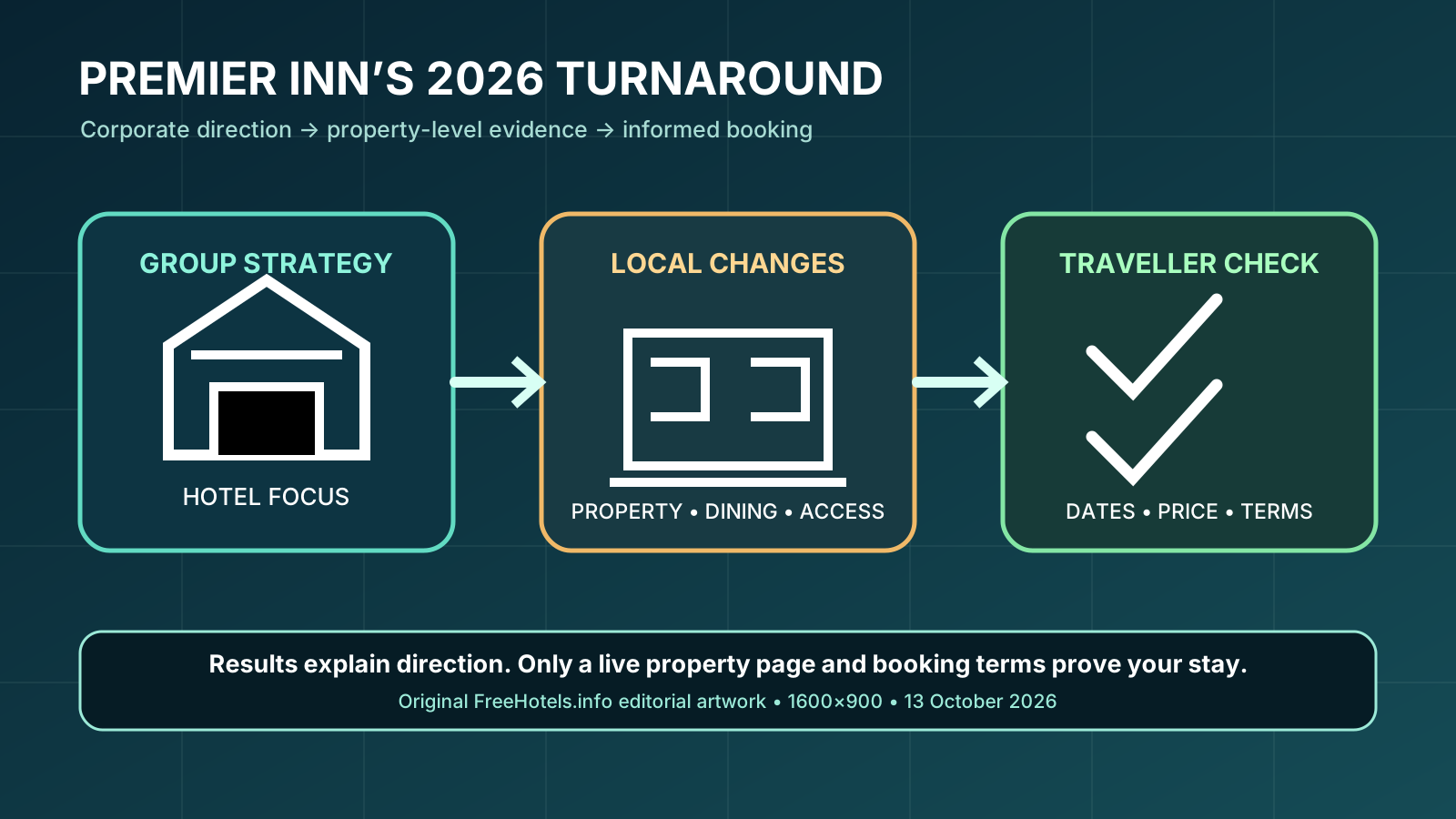
They also do not authorize FreeHotels to resell rooms, use hotel photography or present itself as a Google Travel partner. Inventory, data rights and booking permissions are separate from editorial coverage. FreeHotels continues to distinguish open-data prospects from properties that are bookable through an authorized integration. This article contains no booking claim and no borrowed hotel image; its hero is an original editorial graphic explaining the verified strategic paths.
Traveller verdict: monitor the property, not the headline
Whitbread’s 13 October update supports a clear conclusion about direction: Premier Inn’s owner is continuing a hotel-focused transformation while reporting resilient trading in the UK and stronger expansion momentum in Germany. That may bring openings, property transactions and changes to restaurants over time. The immediate impact on a traveller remains local. One hotel may be unaffected, another may be undergoing work, and a third may have changed its dining arrangement.
Use the corporate news to know which questions to ask, then base the reservation on evidence for the exact hotel. Confirm the bookable room, final price, cancellation terms, food options and access on the intended dates. Keep investor disputes and sales percentages in their proper place. They explain the company’s context; they do not replace the booking contract. That boundary is the difference between useful hotel news and a speculative promise.