Independent editorial analysis. This research was commissioned by Holiday Inn; it is not an independent trial or a survey of children. Rates, amenities and availability must be checked with each hotel.
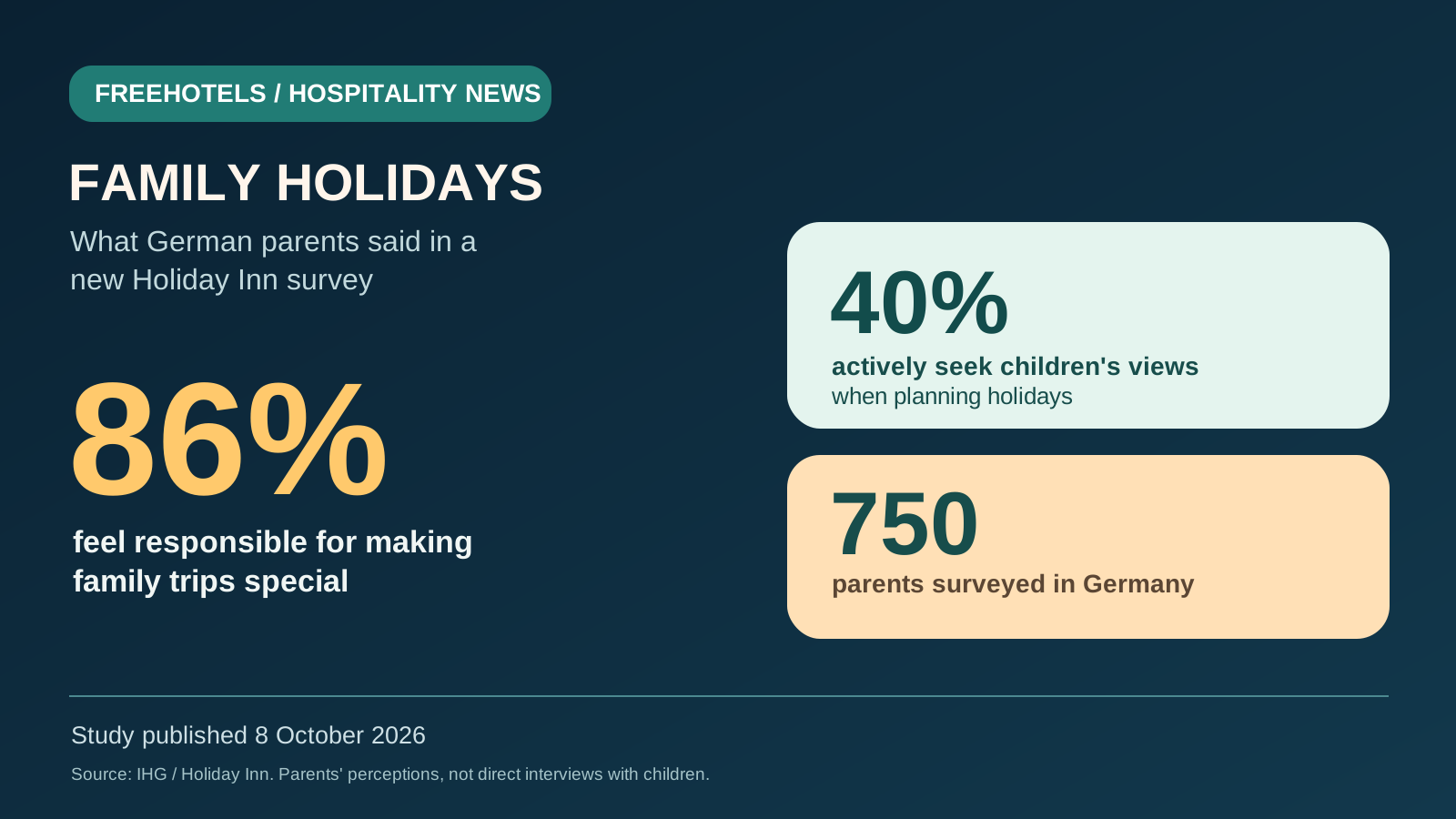
A study of 750 parents in Germany found that 86% feel responsible for making family trips special, while 40% actively seek their children’s input. The findings suggest families should rethink busy itineraries—but do not prove that simpler holidays cost less.
Published 9 October 2026. Research released by IHG / Holiday Inn on 8 October 2026. Figures describe parents’ reports, not direct interviews with children.
What did Holiday Inn announce on 8 October?
IHG Hotels & Resorts released a German survey commissioned for its Holiday Inn brand on Thursday, 8 October 2026. The research was conducted among 750 parents of children aged 0–12. It explores a familiar tension for anyone organising a family break: adults often feel they must turn scarce holiday time into an unforgettable itinerary, while the experiences they think children appreciate may be far less complicated.
The standout figure is 86%: that share of participating parents said they felt responsible for making their family holiday special. The research also reports that nearly seven in ten of those parents believe children place greater value on small and carefree moments than on big-ticket attractions or expensive experiences. These statements are related but not contradictory. A parent may feel pressure to organise elaborate activities while also suspecting that an ordinary afternoon of play could make a child happier.
Holiday Inn used the findings to introduce a promotional activity in Germany under the name “Chief Holiday Officer”. During autumn school holidays, participating Holiday Inn and Holiday Inn – the niu hotels aim to invite young guests to express holiday preferences through a badge and wish list. This is a brand initiative, not a government scheme or a discount guarantee. Travellers should ask the specific hotel whether the activity is offered during their dates.
Who was surveyed—and why the distinction matters
The sample consisted of parents living in Germany with children no older than 12. The release describes the research as nationally representative, but it does not publicly provide every methodological detail needed to independently evaluate weighting, fieldwork dates, response rates or margins of error. Consequently, the figures should be treated as reported survey results rather than as universal truths about every household.
There is another important boundary. The survey asked parents about their responsibilities and perceptions of children’s wishes. The statement that children prefer simpler experiences reflects what adults believe, not a direct poll of children. This nuance is easy to lose in a catchy headline. Nor does a survey about German parents automatically describe the behaviour of British, French or American travellers.
A contemporary report from German hospitality publication Tageskarte independently covered the announcement and repeated the principal findings. That provides a second published reference, although it should not be mistaken for independent replication of IHG’s underlying survey. The brand itself commissioned the research, and its commercial interest in family travel should be acknowledged.
Four in ten parents involve children in holiday choices
According to IHG, 40% of respondents actively seek children’s opinions when making holiday plans. The brand also highlights activities and excursions, cited at 70%, and food and drink at 58%, as areas where children’s preferences influence decisions. The exact denominator for those topic-specific figures should not be assumed to be all German families; they come from the survey’s own presentation and may relate to decision-making subsets.
For a family choosing a hotel, that distinction offers a practical planning method. Rather than presenting a child with twenty hotel listings and asking them to pick, adults can agree on the non-negotiables first—budget, safe sleeping arrangements, dates, transport and accessibility—then offer a manageable choice of activities, meal arrangements or free-time options.
This keeps the responsibility for contractual and safety decisions with adults while giving younger travellers some genuine influence. It may also make a hotel with a simple playground, nearby park or flexible communal space more appealing than a higher-priced property whose most impressive facilities the family will not actually use.
What this means for the total cost of a family hotel stay
FreeHotels does not claim that the survey proves simple holidays cost less. It does not measure hotel room prices, compare package deals or show what any particular family should spend. But the findings prompt a useful question: are you paying for experiences that will be used—or for the idea of the perfect trip?
Before choosing a hotel, compare two realistic plans, not just two headline room rates. Plan A could involve a cheaper peripheral property, daily train fares and a packed sightseeing schedule. Plan B might use a more central hotel within walking distance of parks or neighbourhood attractions, allowing more free time and fewer transport journeys. Either could be the better value depending on the city, season and size of the family.
The meaningful comparison is the total payable amount and the daily effort involved: room rate multiplied by the number of nights, mandatory taxes, breakfast, the room’s occupancy limits, extra beds, parking, transport, cancellation conditions and any attraction tickets you actually intend to buy. A supposedly inexpensive booking can become costly when several extras are charged separately.
For children of different ages, location can matter as much as facilities. A family with a stroller may favour a hotel near an accessible transit stop; a family with older children may want nearby outdoor activities. Looking at a map, public transport timetable and walking route is generally more informative than a generic “family-friendly” badge.
Check the small print on family offers
IHG mentions its Holiday Inn “Kids Stay & Eat Free” programme when discussing the research. That brand positioning should not be read as a promise that every child, every meal and every hotel booking is covered without conditions. Eligibility may vary by brand, property, dining arrangement and booking terms. Always confirm the property’s specific rules, eligible ages and whether breakfast is included in your rate.
In particular, confirm the maximum number of guests allowed in the selected room and whether any sofa bed, cot or connecting room adds to the bill. An attractive discount on meals does not help if the family needs an extra room to stay within occupancy rules.
Cancellation flexibility is another concrete consideration. Families dealing with school timetables, weather-sensitive activities or possible illness may value a cancellable rate. The premium should be evaluated against the risk and deadline, not assumed to be worthwhile in every case.
A simpler itinerary can still be carefully chosen
“Simpler” does not have to mean improvised to the point of stress. It can mean reserving one important activity per day, allowing enough time for breakfast and travel, and leaving unstructured blocks when children can choose between rest, play and a short local outing. That reduces the likelihood that one delay spoils the entire schedule.
A useful hotel shortlist therefore includes both objective and subjective factors. Objectively, the property must suit the party size, budget, dates and travel logistics. Subjectively, it should make the kind of holiday the family wants easier: a convenient neighbourhood for short city breaks, open space for children who need to move, or a calm base if the trip is intended for rest.
Parents can also separate must-have amenities from marketing extras. A swimming pool may be a decisive feature for one family and irrelevant to another. On-site entertainment has value only if it matches the ages, interests, schedules and access rules of the travellers. The survey cannot answer these choices for you; it encourages families to ask the right questions.
What should travellers do with the survey?
The result should not be reduced to “children never want expensive attractions”. Some families love theme parks, big-city museums or ambitious journeys, and the study does not invalidate those preferences. Instead, the useful takeaway is to make spending intentional and planning collaborative rather than treating every free hour as a problem to solve.
If booking for the German autumn school break, check whether an individual Holiday Inn property offers the Chief Holiday Officer activity and whether it is appropriate for your child’s age. Even if it does not, the broader exercise is easy to adapt: ask each family member for one priority, choose a few activities that fit the whole group, then compare hotel options using real transport and booking costs.
For Germany-focused accommodation research, the FreeHotels English city guides can help frame the trade-offs between neighbourhoods and transport. Our hotel news section follows industry announcements while keeping the original sources visible.
Editorial verdict
Holiday Inn’s research makes a plausible observation about the gap between parental planning pressure and perceived children’s preferences. The evidence is still a commissioned parent survey in one country, not a direct study of children or proof that simpler holidays are always cheaper. Its value for travellers lies in reconsidering which amenities and activities they actually need—and checking the complete hotel bill before they book.
A practical boundary between family preference and booking terms
A child’s preferred activity can shape the itinerary, but adults still need to confirm the booked room’s occupancy limit, age rules, accessibility, transport arrangements and final payable amount. The IHG research records parental perceptions; it does not validate the conditions of any individual hotel or replace its booking contract. Families should separate flexible daily activities from non-negotiable safety and accommodation decisions.