FreeHotels.info / PRACTICAL GUIDE
Paying a Hotel Abroad: Understand the Currency Choice Before Accepting It
A hotel bill can be displayed in one currency while a card terminal offers to convert the payment into another. That offer is commonly called dynamic currency conversion, or DCC. Read the currencies, rate and disclosed charges before accepting; a familiar currency display alone does not establish the cheapest final cost.
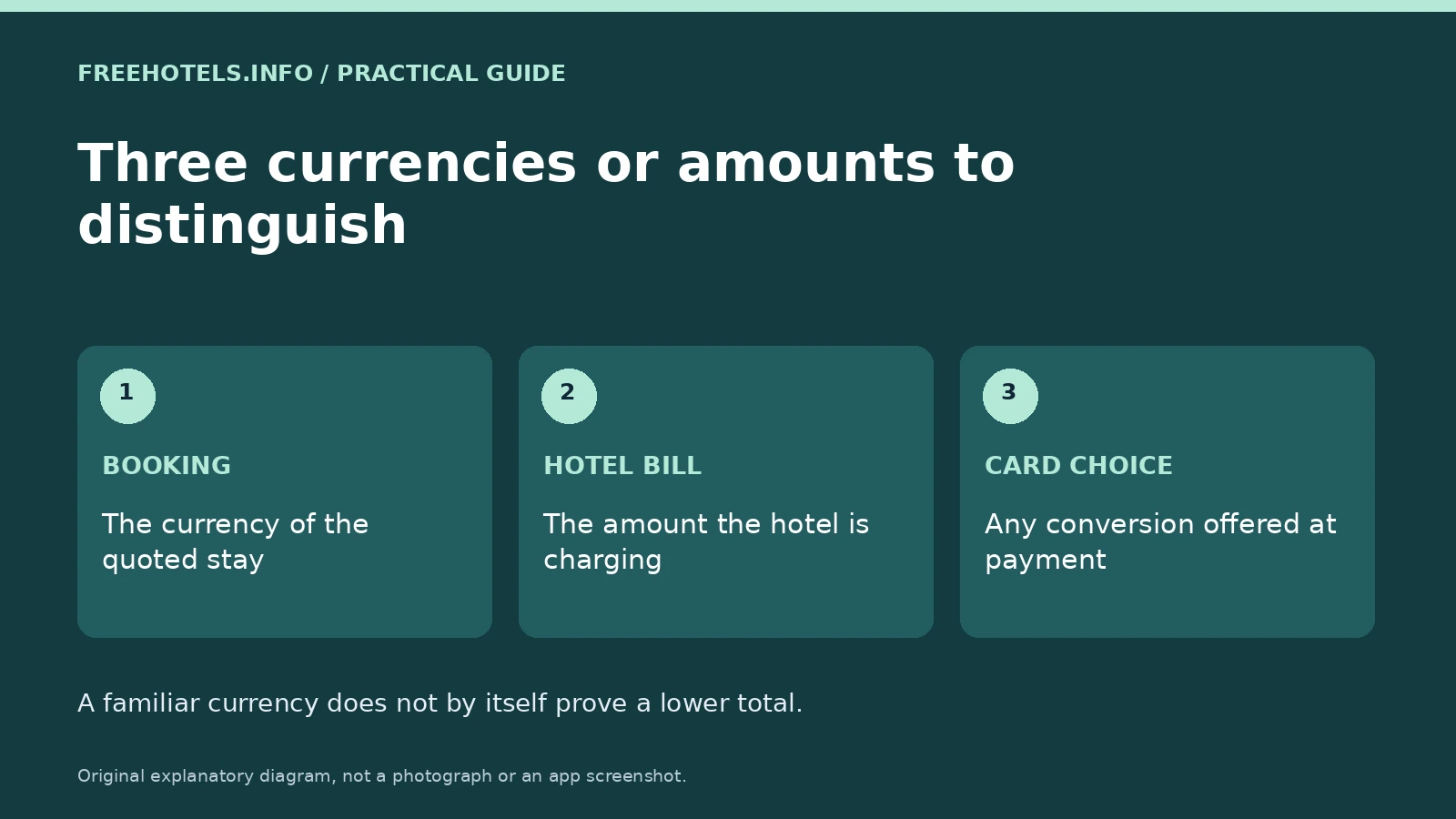
Start by identifying the booking currency
Retain the rate confirmation and note the currency in which the stay was quoted. Separate that from a website's estimated display in another currency. At payment, compare the hotel invoice with the reservation and identify any extras or adjustments before focusing on conversion. A change in the total can have several causes, and not every difference comes from an exchange rate. This simple separation makes a question easier to ask: are you querying the room charge, an additional item, a conversion offer or a later card-statement entry? Treating all of them as one unexplained fee can obscure the part that actually needs clarification.
What dynamic currency conversion describes
Visa explains DCC as an offer by a retailer or ATM to convert a transaction into the cardholder's home currency. At a hotel, this means the conversion choice needs attention in addition to the underlying bill. Read the amount in each currency and the information about the conversion rate and charges. Do not accept an option merely because the figure looks more familiar. The relevant comparison includes the terms of your own card and any disclosed cost attached to the offered conversion. This guide does not claim that every terminal presents the choice in the same layout or that one displayed option is always cheaper in every circumstance.
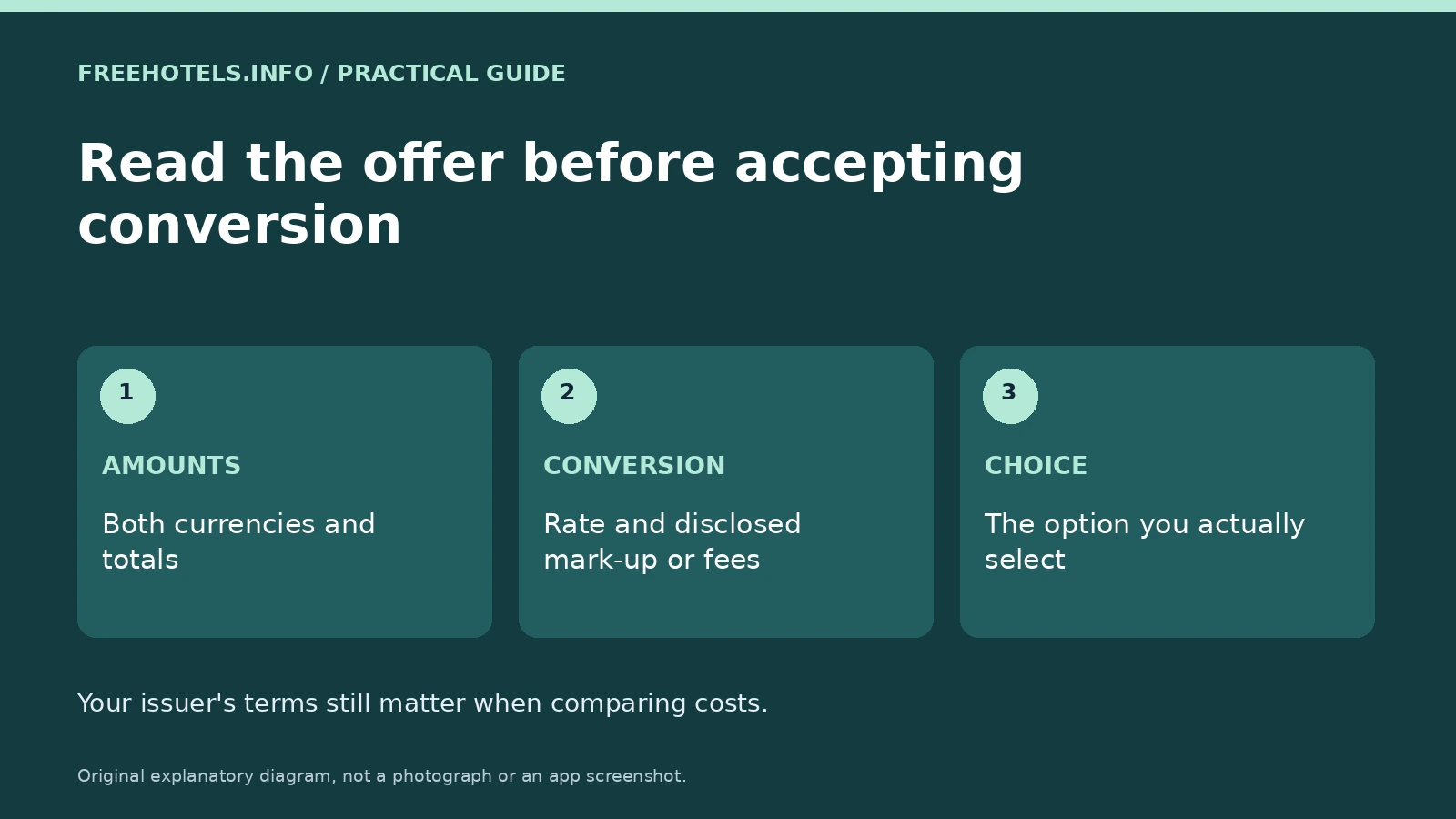
Compare costs rather than currency familiarity
A practical comparison asks what each available route would mean for the final amount under the terms you can actually verify. For a terminal conversion, inspect the offered amount and disclosed conversion information. For a payment left in the hotel's currency, consult the card issuer's applicable exchange and fee terms. Do not invent a future settlement rate to create a precise saving. If you lack information, recognise that the comparison is incomplete and ask for clarification before accepting the offer. An example calculation with made-up rates can illustrate arithmetic, but it cannot establish what your bank will charge for the transaction in front of you.
Use reference rates for context, not a transaction guarantee
The European Central Bank publishes reference exchange rates and explains their information purpose. A reference rate is not a promise of the rate or complete cost applicable to your own card payment. Comparing a hotel receipt with a reference figure without considering dates, card terms and disclosed charges can produce a misleading conclusion. Record the dates and sources if you make a comparison, and keep the original amounts visible. This is a way to organise a query rather than a forecast. The same caution applies to a travel article or a calculator showing an indicative conversion: it does not replace the terms of the actual payment service.
Read the terminal before confirming
Take time to identify the currency and amount shown before accepting the payment. Ask staff to explain an unclear currency choice through the normal transaction process. Do not disclose your PIN or authentication codes to another person to have them make the decision for you. If the display differs from what you expected, stop and clarify the amount before proceeding. Keep any receipt showing the selected currency. The purpose is to make an informed choice, not to assume that a staff member, terminal design or default display necessarily represents your preference. A familiar symbol on the screen is not a substitute for reading the transaction.
Treat a pre-authorisation separately from the final bill
Ask the hotel whether a card entry is an authorisation, a deposit, a charge or another booking-related transaction, and request the information relevant to that entry. Do not assume that every pending amount is the final settled cost of the stay. Keep the hotel's explanation with the reservation and compare it later with what actually posts to the account. The timing and handling depend on the property and payment provider, so this page does not supply a universal release period. If an entry remains unclear, identify its date, currency, amount and status when contacting the hotel or card issuer through official support.
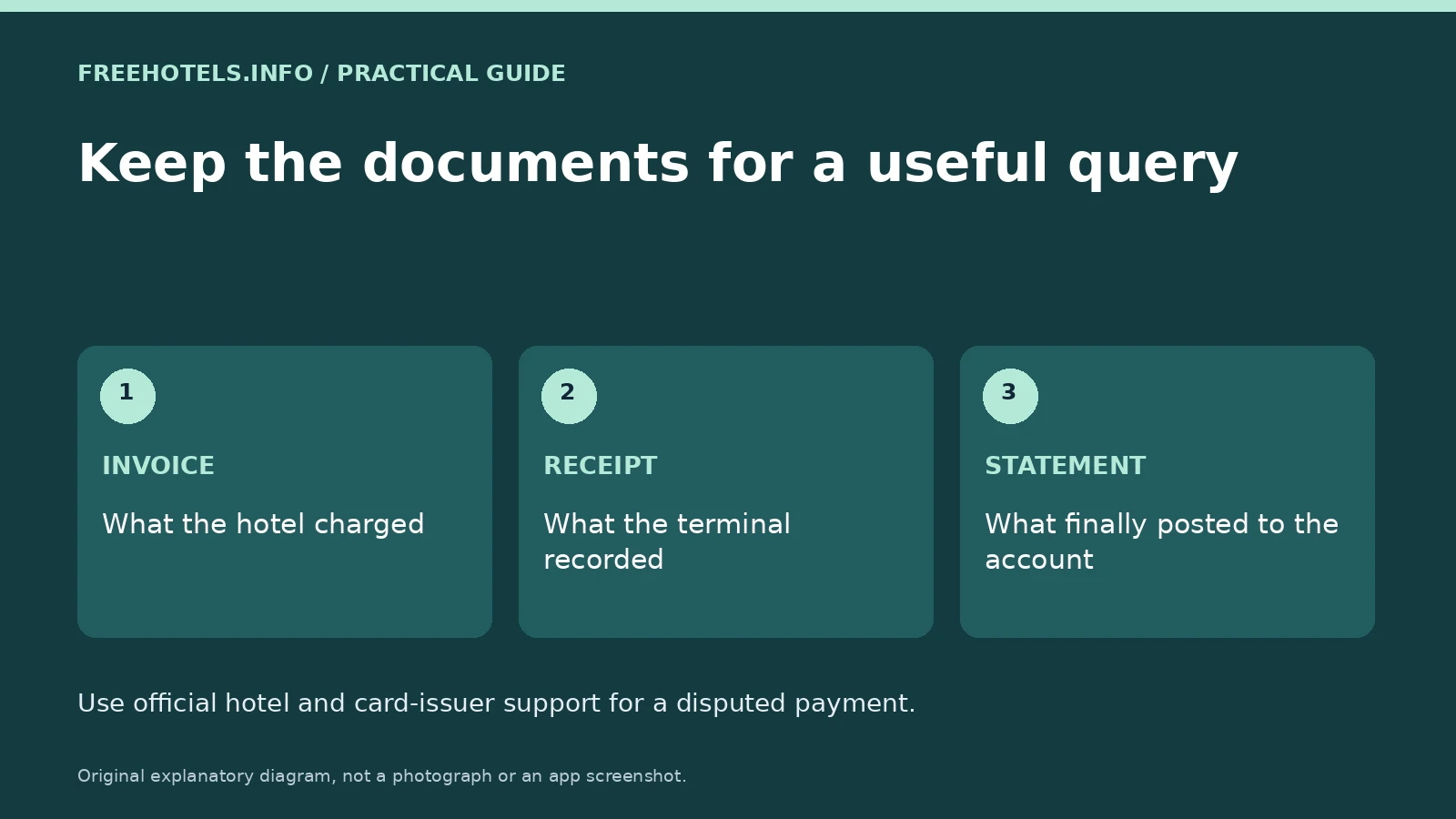
Preserve a three-document comparison
Keep the booking confirmation, the hotel invoice and the card-payment receipt. When the transaction posts, compare the statement entry as well, noting the dates and currencies instead of relying on a screenshot of an earlier pending figure. Remove unnecessary personal information before sharing documents for a query. State precisely which item you dispute or do not understand. A clear comparison helps the hotel or issuer investigate; it does not itself establish wrongdoing or a right to reimbursement. If you are asked for another payment to unlock a refund, verify that request independently through an official channel before taking any further action.
Fit the payment choice into the whole-stay budget
Currency conversion is one part of a hotel cost comparison. Room charges, mandatory fees, transport, meals and other confirmed expenses can also affect the trip budget. Our hotel total-cost calculator lets you organise amounts you have obtained from the relevant providers. Keep estimates labelled and avoid presenting the result as a verified live quote. A difference in one payment fee does not automatically determine which hotel offers the best overall arrangement for your trip. Compare the full booking and the conditions you need, rather than choosing on the basis of a single conversion headline.
The useful result is a documented choice
Before you pay, identify the bill, the offered currencies and the information available about conversion costs. Afterward, retain the receipt and review the final entry. If a discrepancy appears, ask the responsible provider a focused question with the relevant documents. This guide explains a payment choice and a records method; it does not recommend a card product, predict an exchange rate or guarantee a refund. For the reservation itself, our room-confirmation guide shows why an important booking feature should be distinguished from an unconfirmed request before you commit to the stay.
Sources and method
Primary sources checked on 2026-11-06. Practical comparisons are editorial guidance, not a report of a test of your booking, account or circumstances.